- ZWIĄZEK BUDDYJSKI BENCIEN KARMA KAMTSANG POLSKA
-

- Benchen Karma Kamtsang Buddhist Association Poland




Three branches of buddhism
All of the Buddha’s disciples unanimously recognized the Four Truths as the essence of the Teachings of the Awakened One. However, they presented varying understandings of them.
The Four Truths are:
- The truth of suffering
- The truth about the origin of suffering
- The truth of cessation of suffering
- The truth of the path leading to cessation
The greatest discrepancies concerned the method of realizing the “Truth about the path leading to cessation”. Over the centuries in different Buddhist countries, three branches of Buddhism emerged:
- Theravada,
- Mahayana,
- Vajrayana.
Each of them emphasizes different aspects of practice and describes in its own way what follows the cessation of suffering—the fruit of the path, Nirvana.
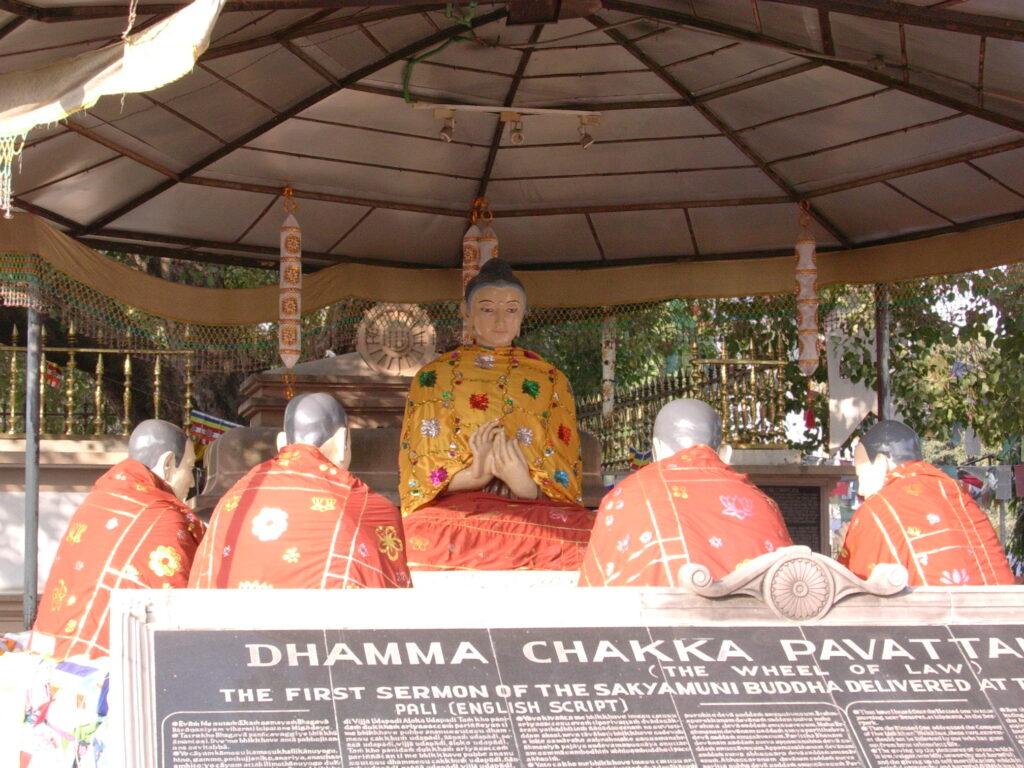
Theravada
Around the 3th century BCE, the Theravada tradition (“School of the Elders”) clearly crystallized, emphasizing the idea of liberating oneself from samsara, or the cycle of suffering. According to this tradition, the Buddha is someone exceptional. His disciples may indeed attain liberation, but it is not exactly the same achievement as that of Buddha Shakyamuni. Liberation – the state of an Arhat – is the end of all suffering. It is compared to blowing out the candle flame.
Theravada is based on the first cycle of the Buddha’s teachings, known as the First Turning of the Wheel of Dharma. It emphasizes the importance of teachings on the consequences of one’s actions, the necessity of ethical self-discipline, and the absence of an independent self. Followers of this tradition maintain that these are the only true and ultimate teachings of Shakyamuni.
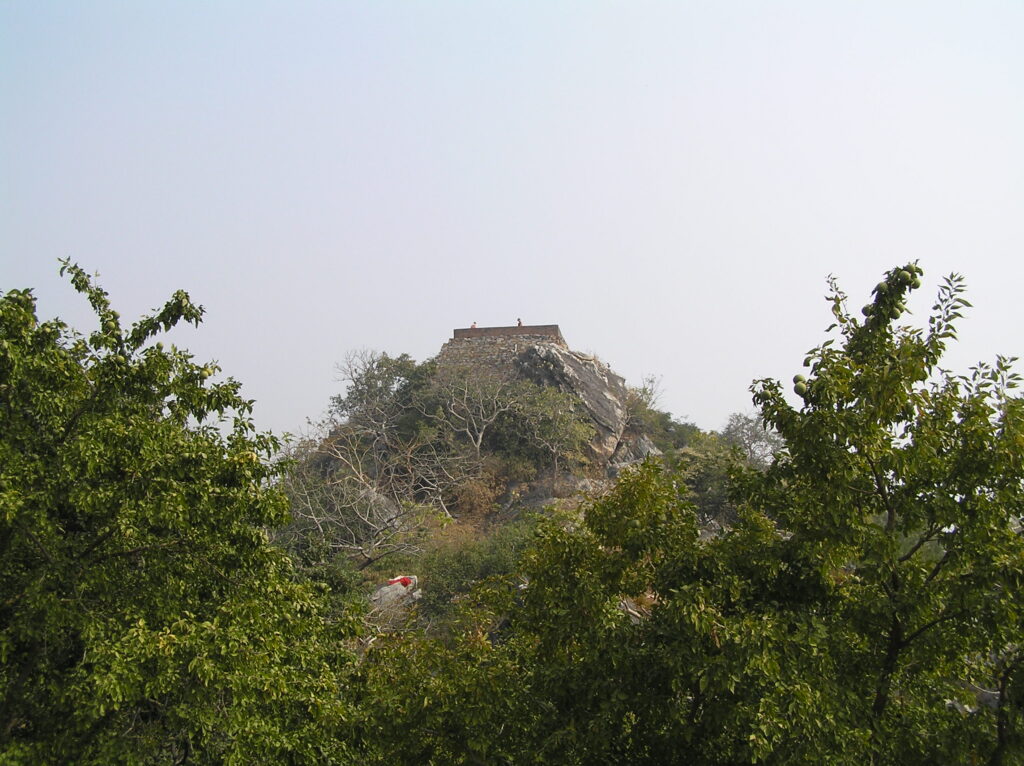
Mahayana
The second branch of Buddhism is based on the assertion that the teachings of the First Turning are true, but not ultimate, as the Buddha later imparted even deeper teachings in the Second Turning of the Wheel of Dharma.
The elements of the teachings called Mahayana (“The Great Vehicle”) were present from the very beginning of Buddhism, but as a fully distinct tradition, they took shape only in the 1st century CE. What distinguishes them is the fundamental motivation of the practitioner. Mahayana promotes the attitude of the Bodhisattva, someone who does not think only of their own liberation but wishes to free all sentient beings from suffering. In spiritual practice, emphasis is placed on developing love and compassion, as well as altruistic work for the benefit of others.
In Mahayana teachings, special attention is given to creating the causes for attaining a higher stage of spiritual development. The qualities that are developed at this stage become in turn the cause for reaching an even higher stage and eventually the ultimate goal of the spiritual path. That is why it is called the path of causes or the gradual path.
It is also taught that not only the self is not an independent entity, but external phenomena also exist solely in an interdependent way, and none of them is self-existent. This lack of self-existence is called emptiness. The term emptiness is often completely misunderstood by Western interpreters. They accuse Buddhism of being nihilistic, which is far from the truth.
The Buddha himself says in the Ratnakuta Sutra:
The mistake of believing in the reality of phenomena is as great as the largest mountain, but the mistake of nihilism is even greater.
The fruit of Mahayana practice is the attainment of Buddhahood, which is the unity of the Three Kayas. Anyone can achieve this if only one follows the Bodhisattva path for many lifetimes.
In Mahayana Buddhism, Buddhahood is defined as the unity of three aspects, called the Three Kayas in Sanskrit. Kaya literally means body, although of course not in the physical sense. These three Kayas are:
- Dharmakaya
- Sambhogakaya
- Nirmanakaya
The first one is the Dharmakaya: the Dharma Body or the Kaya of Ultimate Truth. Dharmakaya cannot be expressed in any words. It has no form. It is not composed of any elements, so it cannot disintegrate. It never came into being as an independent object, so it will not cease to exist. It is not located in a specific place. It cannot be known by any of the senses. Not only can it not be seen, heard, smelled, etc., but we also cannot grasp it with our thoughts, because it is beyond common reasoning. It is referred to as the Ultimate Truth.
The Mahayana treatises say that the Dharmakaya is the Buddhahood itself, its essence, its true nature. Among the innumerable qualities of the Dharmakaya are the infinite love and compassion for all sentient beings without exception. Since we cannot perceive or communicate with this Kaya directly, the form Kayas are emanated from it as a manifestation of love and compassion.
There are two types of form Kayas, as there are two groups of those in need of help. The first one is the Sambhogakaya, the Kaya of Great Bliss. These are the activities of a Buddha manifesting in Pure Lands. Various forms of the Sambhogakaya manifest to serve as guides for those who have reached a very high stage of spiritual development, having already purified their gross emotional defilements.
How can one learn from the Sambhogakaya? One must attain at least the stage of spiritual purity known as the first level of the Bodhisattva and, upon dying, not succumb to any negative emotions such as anger. Through a pure state of mind and accumulated good deeds, we will be reborn in one of the Pure Lands, where we will receive teachings from the Sambhogakaya and quickly progress through the successive stages of the path to Buddhahood.
People who achieve this spiritual purity during their lifetime can receive such guidance in visions. There are many Sambhogakaya figures in Buddhist iconography. They have a heavenly appearance; often many arms and faces. The history of Mahayana Buddhism is full of holy masters who saw the Sambhogakaya in waking life, during meditation, or in dreams.
Of course, many such revelations were considered spurious – only a few made it into the canon. Hence the old joke, which can probably be applied to any religion: “When you talk to the Buddha, it is called prayer, but when the Buddha talks to you, it is madness.”
And finally, the third aspect of the Buddha, the Nirmanakaya, the Emanation Body. It is the physical presence of the Buddha in this world to teach ordinary people, whose minds are burdened not only with fundamental ignorance but also with emotional defilements and other weaknesses.
The forms of Nirmanakaya activity can be various. The most sublime of them is the historical Buddha Shakyamuni, but he was not the only one. The Buddha himself, when asked by his disciples before his death: “Whom shall we turn to when you are gone?”, answered: “I will appear in the form of innumerable teachers.”
| Dharmakaja | Sambhogakaja | Nirmanakaja | |
| Where does it manifest? | It does not manifest in any form, although it pervades everything. | In Pure Lands | Both in Pure Lands and in samsara. |
| For whose benefit? | For one’s own benefit. It means freeing oneself from all suffering and realizing the omniscience of the Buddhahood. | It leads on the path those who are at least at the first stage of the Bodhisattva. | It helps ordinary sentient beings as a spiritual teacher, but also as, for example, an artist, a good ruler, or a doctor. |
| What does it teach? | It is beyond words and does not itself give any teachings. For the benefit of others, it emanates the Form Kayas. | Exclusively Mahayana (including Vajrayana) | Both the path leading only to the liberation of oneself and the path of the Bodhisattva. |
In order to help people understand the Truth and lead them beyond suffering, it is not necessary to use names such as Buddha or Buddhism. Buddha’s activity can also manifest itself in the form of doctors, scientists, and artists. Teachers of other religions are also seen in Buddhism as forms of Buddha’s activity, which appear to teach in a specific place and time in the most appropriate way, leading people to the Ultimate Truth. For this reason, respect for other religions is inscribed in the spirit of Buddhist teachings.
As I mentioned, many Westerners present Buddha simply as an exceptionally wise man. As a result, questions arise: “To whom do Buddhists pray?”. For a Mahayana Buddhist, Buddha is much more than just a wise man. Buddha is the Dharmakaya, which is beyond time and physical space. It is also a stream of countless forms of Sambhogakaya and Nirmanakaya, manifesting constantly to bring help to all living things.
So Buddhists do pray to the Buddha. And since the Dharmakaya permeates everything, it makes sense for them to pray anywhere and at any time.
The canonical Mahayana texts are called sutras, and so the tradition is often referred to as sutrayana.
Within the many traditions of the great Mahayana tradition, some are based on the sutras and the treatises that explain them that belong to the Third Turning of the Wheel of Dharma. The Second Turning, as we have said, teaches that everything that appears, both the perceived phenomena and the perceiving mind, is essentially empty.
The Third Turning teachings agree with this, but they also emphasise that the ultimate nature of every sentient being is the Buddha nature, the tathagatagarbha. Every being carries within themselves this seed of Buddhahood, but it is obscured by ignorance and the emotional defilements that emerge from it.
Buddhahood is not, therefore, a product of the path. It has always existed within us; the path is only removing the obscurations that prevent the manifestation of our innate Buddha nature.
Vajrayana
This branch of Buddhism emerged as an independent trend the latest, in the first centuries of our era. It is a further development of the teachings of the Third Turning of the Wheel of Dharma.
Accepting the teachings of Theravada and Mahayana as true, Vajrayana adds its own specific methods designed to quickly and effectively lead to the realization of the Bodhisattva ideal in this life. It offers a “quick path,” in contrast to the “gradual path” of Mahayana.
Instead of focusing on the causes, Vajrayana aims directly at the goal itself—making the fruit the path. This means that a practitioner, although they have not yet reached the end of the spiritual path, strives to maintain such a mental attitude as if they had already achieved the highest goal. They try to think, feel, and perceive as though they are already a Buddha. Adepts of this school know that this is the quickest way to overcome destructive emotions and awaken positive qualities within themselves.
Thus, the same goal, the goal of the Mahayana path, is realised in Vajrayana through different methods:
- During meditation, the Vajrayana practitioner imagines themselves as a Buddha, and visualises their body in great detail as the body of a Buddha;
- By repeating the sacred words of a mantra, they identify their speech with the speech of a Buddha;
- With their mind, they try to avoid getting entangled in destructive emotions and maintain an attitude of love and compassion—the inherent qualities of a Buddha’s mind.
The pure state of body, speech, and mind is expressed in the form of the Buddha Sambhogakaya, who is usually situated in the palace of the mandala. As support for practice, mandalas are often used, either painted or created from coloured sand.
Just as monastic life begins with the taking of vows, and entering the Bodhisattva path happens through making vows and receiving Bodhisattva ordination, so does Vajrayana practice require an appropriate initiation ritual (abhisheka).
For centuries, masters have continuously been giving “empowerments” to their disciples, enabling them to identify with a particular aspect of a Buddha. Those students who succeed on the path eventually become masters themselves, passing on this tradition further.
The uniqueness of the Vajrayana tradition is that it is not limited to the transmission of intellectual reflections alone, but from generation to generation, teachers transmit a direct, living experience of the ultimate nature of mind – the Buddha nature – that transcends dualistic reasoning. Nor are we dealing here with an unpredictable mystical experience that a holy person is unable to convey to others. The great Vajrayana masters not only attained profound spiritual realisation themselves and demonstrated extraordinary spiritual qualities, but also, using skillful means led their students to the same realisation. As a result, the transmission of living experience from the mind of the master to the mind of the student has been preserved from generation to generation, continuing to this day.
For centuries, these teachings were accessible only to a select group of initiates. However, over time, they have become increasingly available to a wider audience. Yet, the fundamental principle remains unchanged—without a living transmission from a master, it is impossible to authentically practice this path.
The Vajrayana tradition remains alive in China, Japan, Tibet, Mongolia, and other countries of Central Asia. However, Chinese and Japanese Vajrayana are almost unknown to the Western world because in the temples there these teachings are still considered secret and accessible only to a select few. On the other hand, we hear more and more about lamas from the Roof of the World and Tibetan Vajrayana Buddhism.
Tibetan Buddhism integrates all aspects of the teachings of Buddha Shakyamuni:
- in its external aspect, it recommends observing ethical self-discipline, such as in Theravada; as a result, the monastic community here is larger than in any other country in the world;
- in its internal aspect, concerning the mind, it emphasises developing the altruistic attitude of a Bodhisattva and contemplating the illusory nature of all phenomena, which is the essence of Mahayana;
- and in its most personal, secret aspect, it uses Vajrayana meditations, which are intended to quickly lead adepts of this spiritual path to their goal.
The Buddha’s teachings describing Vajrayana are called tantras. Therefore, Buddhist scriptures often refer to this tradition as tantrayana or mantrayana due to the great importance placed on the recitation of mantras. It should be emphasized, however, that this tradition of Buddhism has nothing in common, apart from its name, with Hindu tantrism. The difference between Buddhist and Hindu tantras is much greater than, for example, the difference between Christianity and Islam.
Until the exodus of Tibetans introduced the Western world to authentic Vajrayāna, most Western scholars of religion misinterpreted the iconographic symbols of Buddhist tantras, classifying this branch of Buddhism as a form of degenerate magic. Even today, such absurd opinions can still be heard. The fact is that Tibetan iconography can evoke mistaken associations in some people. This misunderstanding particularly concerns depictions of male and female figures in sexual union, as well as wrathful forms of the Buddha, depicted in paintings with bared fangs and fearsome attributes such as skulls, bones, or snakes.
It is worth realising that each religion operates with its own symbolism, which is incomprehensible to the layman. For anyone with even a basic understanding of Buddhism, it is clear that the wrathful appearance of some Buddhas is an expression of awakened compassion—an absolute refusal to accept suffering and the causes of suffering of all sentient beings. Likewise, the union of male and female aspects represents the union of compassion and wisdom.
A Buddhist seeing such symbolism does not associate it with sensual pleasure. Just as no one who knows even a little about Christianity associated it with cannibalism upon hearing about eating the body and drinking the blood of the Son of God during communion, although in the past, Christian missionaries were accused of this when they first appeared in completely different cultures. The example of widely respected Vajrayana representatives, such as His Holiness the Dalai Lama and many other lamas, clearly demonstrates the noble results that come from applying the methods of this tradition.
Summary
| Theravada | Mahayana | Wajrayana | |
| Motivation | Liberation of oneself from samsara. | The wish to liberate all beings from suffering – the attitude of a Bodhisattva. | The wish to liberate all beings from suffering – the attitude of a Bodhisattva. |
| Who is Buddha? | A Buddha is someone who has purified all defilements and developed primordial wisdom. He is someone exceptional. His disciples are not able to achieve what he has. | A Buddha is the unity of the Three Kayas: Dharmakaya, Sambhogakaya, and Nirmanakaya. Every being has the potential to become a Buddha. | A Buddha is the unity of the Three Kayas: Dharmakaya, Sambhogakaya, and Nirmanakaya. Every being has the potential to become a Buddha. |
| Which texts is the tradition based on? | The Three Baskets of the Buddha’s Teachings, written in Pali: Vinaya, Sutta, and Abhidhamma. | The Mahayana Sutras originally written in Sanskrit and other languages of Northern India, and now known through translations into various languages, such as Chinese and Tibetan. | Buddhist tantras originally written in Sanskrit and other languages of Northern India, now known through translations into various languages, such as Chinese and Tibetan. |
View | The First Turning of the Wheel of Dharma, also known as the Four Noble Truths. The perceiving mind, or the ‘self,’ is empty in its essence. Compounded phenomena are inherently impermanent, bring suffering, and lack inherent existence. Everything manifests through dependent origination, and our sufferings and joys are the results of karma, that is, our previous actions, including those performed in past lives. | The Second and Third Turnings of the Wheel of Dharma. Everything – both the perceiving mind and the perceived phenomena – is essentially empty, and the illusory manifestation of the perceiver and the perceived occurs through dependent origination. The true nature of the mind is beyond the extremes of existence and non-existence and cannot be described with any words. | Based on the tantras, which are a further development of the Third Turning of the Wheel of Dharma. The mind is essentially empty, but its nature is luminosity. Emptiness and luminosity are inseparable. When we are unaware of this, we cling to appearing phenomena (the aspect of luminosity) as real. As a consequence, we experience the suffering of samsara. When we realise the inseparability of emptiness and luminosity, we will see that everything is a Pure Land. |
| Path | By contemplating the Four Noble Truths, we understand the necessity of engaging in the threefold training, which consists of cultivating: 1) right conduct, 2) meditative absorption, and 3) wisdom. This is accomplished by following the Noble Eightfold Path. | Developing compassion inseparable from the understanding of the emptiness of all phenomena. The triple training is realised through the practice of the six liberating perfections of the Bodhisattva, known as the six paramitas. | Training in two processes: (1) the generation stage (Tib. kye rim), which consists of meditations on the form of a Buddha and the recitation of mantras, and (2) the completion stage (dzog rim), which is formless meditation directly on the nature of the mind. |
| Fruit of the path | Liberation from samsara – the state of an Arhat. | Attainment of the complete Buddhahood after three immeasurable kalpas of practising the path. | Attainment of Buddhahood even in one lifetime or, at the latest, within a few lifetimes. |
Lama Rinchen